At Pleasant Valley Dental, our goal is to help every patient enjoy a healthy, comfortable, and confident smile. Damage, decay, and missing teeth can affect much more than the appearance of your smile. They may also make it difficult to chew comfortably, speak clearly, or maintain proper oral health. Our restorative dentistry services are designed to repair damaged teeth, replace missing teeth, and restore the function and appearance of your smile.
Every patient’s dental needs are different. For that reason, we offer several types of dental restorations and create treatment recommendations based on the condition of your teeth, gums, bite, and overall oral health. Whether you have a small cavity, a broken tooth, several missing teeth, or an existing dental restoration that needs attention, our team is here to help you understand your options.
What Is Restorative Dentistry?
Restorative dentistry focuses on repairing or replacing teeth that have been affected by decay, injury, wear, or tooth loss. While cosmetic dentistry is often primarily focused on improving appearance, restorative dental treatments are intended to improve both oral function and dental health. Many restorative procedures also provide significant cosmetic benefits because modern dental materials can closely resemble natural teeth.
Restorative treatment can be as simple as placing a filling in a small cavity or may involve a more comprehensive solution such as a dental bridge, dentures, or dental implants. Addressing damaged or missing teeth can help protect surrounding teeth and make it easier to maintain a healthy bite.
Common reasons patients may need restorative dental care include:
- Tooth decay and cavities
- Broken or cracked teeth
- Chipped teeth
- Worn or weakened teeth
- Missing teeth
- Old or damaged dental restorations
- Difficulty chewing because of damaged teeth
- Changes in the bite caused by tooth loss
- Teeth that require additional protection following treatment
Dental Fillings for Cavities and Damaged Teeth
One of the most common restorative dentistry procedures is a dental filling. Cavities develop when bacteria and acids damage the protective enamel of a tooth. Without treatment, decay can continue deeper into the tooth and potentially lead to discomfort, infection, or the need for more extensive dental treatment.
During a filling procedure, the damaged or decayed portion of the tooth is removed and the area is restored with dental material. The filling helps rebuild the tooth’s shape while protecting the affected area from additional damage.
Fillings may also be useful for certain chipped, cracked, or worn teeth. Depending on the location and extent of the damage, we can determine whether a filling or another type of restoration would provide the best long-term result.
Dental Crowns to Protect and Strengthen Teeth
When a tooth has more extensive damage than can be repaired with a filling, a dental crown may be recommended. A crown is designed to cover the visible portion of a tooth and restore its shape, strength, and function.
Crowns can be used in a variety of situations, including teeth that are severely worn, cracked, weakened by a large filling, or extensively damaged by decay. A crown may also be placed after certain root canal treatments or used as part of a dental implant restoration.
Modern crowns are designed to blend naturally with the surrounding teeth. Our goal is to provide a restoration that feels comfortable when you bite and looks appropriate within your smile.
Dental Bridges for Missing Teeth
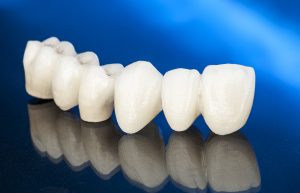
If you are missing one or more teeth, a dental bridge may be one option for restoring the space. As the name suggests, a bridge spans the gap created by missing teeth. Traditional bridges are typically supported by neighboring teeth and are securely cemented into place.
Replacing missing teeth is important for more than appearance. An open space can sometimes allow nearby teeth to gradually shift position, potentially affecting your bite and making certain areas more difficult to clean. Replacing the missing tooth can help restore chewing function while maintaining better alignment within your smile.
Dental bridges are fixed restorations, meaning patients do not remove them for daily cleaning. Our team will explain how to brush and floss around your bridge so you can properly care for the supporting teeth and surrounding gums.
Partial and Full Dentures
Dentures remain an effective solution for patients who have lost multiple teeth. The type of denture recommended depends primarily on how many natural teeth remain and their overall health.
Partial dentures are designed for patients who still have some healthy natural teeth. They replace the missing teeth while fitting around the remaining teeth. Full dentures, also called complete dentures, are used when all or most teeth in an upper or lower arch need to be replaced.
Today’s dentures can provide a natural-looking smile while improving the ability to eat and speak. Because every mouth is different, proper fit is an important part of achieving a comfortable result. We evaluate your gums, jaw, remaining teeth, and bite when discussing whether dentures are appropriate for you.
Dental Implants for Long-Term Tooth Replacement
Dental implants have become an increasingly popular method of replacing missing teeth. Unlike a traditional bridge or removable denture, an implant is placed into the jawbone where it functions as an artificial tooth root.
After the implant has been placed and the surrounding tissues have healed appropriately, a dental restoration can be attached to the implant. For a single missing tooth, this is commonly an implant-supported crown. Multiple implants may also be used to support other types of restorations depending on the patient’s individual needs.
One advantage of dental implants is that they provide independent support for a replacement tooth without relying on adjacent teeth in the same way as a traditional bridge. Implants are also designed to provide stability when chewing and can closely resemble the appearance and function of natural teeth.
Dental implants require healthy gums, adequate supporting bone, and good oral hygiene. Not every patient is immediately ready for implant treatment, so a dental examination is necessary to determine whether implants may be appropriate for your smile.
Implant Restorations
Pleasant Valley Dental also provides dental implant restorations. The implant itself is the component positioned within the jawbone, while the visible replacement tooth attached above it is the implant restoration.
Implant crowns and other implant-supported restorations can experience normal wear over time, just like other dental restorations. If you already have a dental implant and notice that the crown feels loose, uncomfortable, damaged, or different when you bite, we encourage you to have it evaluated.
Our team can examine your implant restoration and determine what may be needed to restore comfortable function.
Why Replace Missing Teeth?
Some patients wonder whether replacing a missing tooth is necessary, particularly when the space is toward the back of the mouth. Tooth replacement, however, can play an important role in maintaining normal dental function.
Depending on the location of the missing tooth, tooth loss may contribute to changes in chewing, speech, and bite alignment. Nearby teeth may gradually shift toward an open space. Replacing the missing tooth can help maintain more balanced function and may make eating more comfortable.
During your consultation, we can compare options such as bridges, partial dentures, full dentures, and dental implants so you can understand the advantages and considerations associated with each treatment.
What Happens During a Restorative Dentistry Appointment?
Your restorative treatment begins with a thorough dental evaluation. We examine the affected tooth or teeth and consider the health of the surrounding gums, supporting structures, and bite. Dental X-rays may be recommended when we need additional information about areas that cannot be fully evaluated through a visual examination alone.
Once we understand the condition of your smile, we will explain our findings and discuss appropriate treatment options. Whenever possible, we aim to preserve healthy natural tooth structure while providing a restoration that supports long-term dental health.
There is not one restorative treatment that is right for every patient. A small cavity may only require a filling, while a severely damaged tooth may need a crown. Missing teeth may be replaced with a bridge, denture, or dental implant depending on your individual circumstances and preferences.
Caring for Dental Restorations
Good oral hygiene remains important after restorative dental treatment. Although crowns, bridges, fillings, dentures, and implant restorations are made from durable dental materials, the natural teeth and gums surrounding them still require regular care.
Patients should continue brushing thoroughly, cleaning between their teeth daily, and attending routine dental examinations and professional cleanings. If you have a bridge, implant, or another specialized restoration, our dental team can show you techniques and tools that can make cleaning around the restoration easier.
Contact our office if a restoration becomes loose, breaks, causes discomfort, or suddenly feels different when you bite. Evaluating a problem early may help prevent additional damage.
Restorative Dentistry at Pleasant Valley Dental
You do not have to live with teeth that are broken, damaged, decayed, or missing. Restorative dentistry provides several ways to rebuild your smile and improve everyday dental function. At Pleasant Valley Dental, we take the time to evaluate your individual needs and help you choose a treatment approach that makes sense for your oral health.
Whether you need a dental filling, crown, bridge, dentures, dental implant restoration, or another restorative dental treatment, our team is ready to help you take the next step toward a healthier and more confident smile.
If you have a smile that you are not proud of or are concerned about damaged or missing teeth, don’t hesitate to contact us today at (928) 855-5159. We would be happy to discuss your restorative dentistry options and help you get closer to a healthy, functional, and natural-looking smile.